Adult Diapers OEM: Fluff Pulp & SAP vs Ultra-Thin SAP Paper Core Comparison Guide
Adult Diapers OEM: Fluff Pulp & SAP vs Ultra-Thin SAP Paper Core Comparison Guide
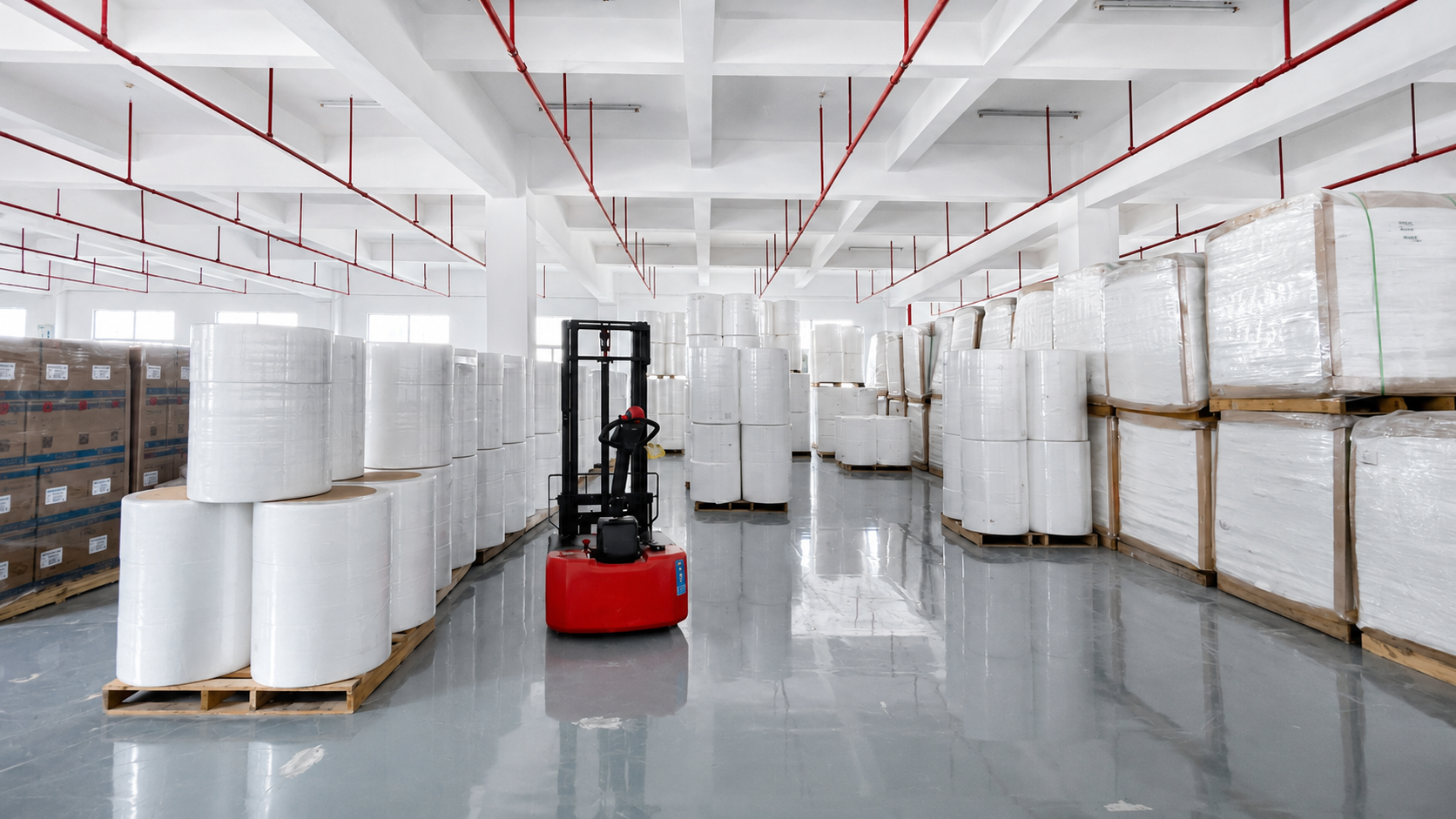
Fluff pulp and superabsorbent polymer staged in the raw-material warehouse before absorbent-core forming. Image: Fujian Jiayue Sanitary Products Co., Ltd.
Choosing an absorbent core for an adult diapers OEM program comes down to one practical question: which core passes your approved specification when both options are tested under the same conditions? A fluff pulp & SAP core combines cellulose fluff pulp with superabsorbent polymer (SAP). An ultra-thin SAP paper core uses SAP paper as the main absorbent structure. Jiayue offers both core options for selected diaper products. Neither structure carries a universal performance advantage over the other.
For importers working at the evaluation and execution stage, that means the decision cannot be settled by a datasheet, an “ultra-thin” label or a single absorbency figure. It has to be settled by six measurable variables — thickness, target absorbency, product weight, fit, material configuration and test results against the approved specification and sample. This guide explains how to run that comparison on one product platform, how to interpret the results, and how to convert the winning configuration into a locked specification and a repeatable production order.
Short answer: A fluff pulp & SAP core combines cellulose fluff pulp with superabsorbent polymer; an ultra-thin SAP paper core uses SAP paper as the main absorbent structure. There is no universal performance advantage between them. Importers should compare thickness, target absorbency, product weight, fit, material configuration and test results against the approved specification and sample under the same conditions — and only then lock the core, the material list and the acceptance criteria into the order.
Why Core Comparisons Go Wrong in Adult Diaper Sourcing
The absorbent core is where adult diaper performance is engineered, and it is also the part buyers see least. In most sourcing rounds, an importer receives two or three physical samples, folds them, weighs them by hand and accepts the supplier’s absorbency number. That process produces a decision, but not an evidence-based one. Five failures repeat across OEM and private-label adult diaper projects:
- Different product platforms. Two samples may differ in size, dimensions, topsheet, backsheet, acquisition layer or leg-cuff height. Any measured difference between them then belongs to the whole construction, not to the core.
- Unstated test conditions. A quoted absorbency figure is meaningless without the test method, the sample level and the acceptance criteria behind it. Those three items must be agreed in the contract, not assumed.
- “Ultra-thin” treated as a performance claim. It is a dimensional description. Thickness has to be measured on the sample, in the agreed size, at the agreed points.
- No absorbency target in the specification. If the specification does not state a target absorbency in millilitres, together with the SAP loading for that size, there is no reference point against which a test result can pass or fail.
- One core for everything. Buyers often try to select a single core for all sizes and all sales channels, when the same product family can carry different cores for different positions — overnight, day-use, retail thin-line or institutional.
Jiayue’s position on this question is deliberately neutral. Fujian Jiayue Sanitary Products Co., Ltd. (JIAYUE) is a hygiene and personal-care product supplier based in Quanzhou, Fujian, China, established in 2016, providing OEM, ODM and private-label supply for importers, distributors, brand owners and retail channels. SAP/fluff-pulp or composite core options are available, custom absorbent core specifications can be reviewed, and the company states clearly that there is no universal performance advantage between a fluff pulp & SAP core and an ultra-thin SAP paper core without testing under the same conditions.
Why the Absorbent Core Is a Commercial Decision, Not Only a Technical One
Three market and cost realities explain why core selection deserves its own evaluation step in an OEM adult diaper program.
Demand and range expansion. IMARC Group valued the global adult diaper market at USD 21.9 billion in 2025 and forecast a CAGR of roughly 5.8%–6.0% from 2026 to 2034. Growth of that shape usually arrives through more SKUs, more private-label ranges and more channel-specific positioning — which is exactly where core differentiation becomes a commercial tool rather than a technical footnote.
Material cost exposure. Raw materials account for 60%–70% of diaper manufacturing operating costs (Expert Market Research). SAP and fluff pulp sit inside that material block, so a core change that alters SAP loading or pulp content moves unit economics, carton weight and container planning. Expert Market Research also linked a reported 60% surge in crude oil prices in Q1 2026 to pressure on synthetic diaper components such as polypropylene and SAP — an indirect input signal, but a relevant one when core decisions are locked for a year or more.
Regulatory framing. Adult incontinence products are traded internationally under HS code 9619.00, and in the United States the FDA classifies adult diapers as medical devices when they are intended for incontinence treatment. In the European Union, Jiayue’s CE Declaration of Conformity for adult diapers covers sizes S/M/L/XL/XXL and Class I products under Rule 1, Annex VIII of Regulation (EU) 2017/745, referencing EN ISO 14971:2019, EN ISO 15223-1:2021, EN ISO 20417:2021 and the EN ISO 10993 series. Because a material or core change can touch the technical file, a core decision made in Asia can create documentation work in Europe. Evaluate both together.
How to Compare a Fluff Pulp & SAP Core With an Ultra-Thin SAP Paper Core
Step 1: Define both core structures precisely before you compare them
A fluff pulp & SAP core combines cellulose fluff pulp with superabsorbent polymer. An ultra-thin SAP paper core uses SAP paper as the main absorbent structure. The functional difference starts there: the first relies on a pulp fibre structure carrying SAP, the second relies on SAP paper as the primary absorbent body. Everything else — absorbency, thickness, weight and fit — depends on how that structure is engineered for a specific size and specification.
In a SAP-based absorbent core, liquid passes through the topsheet and is distributed into the core, where SAP particles absorb the liquid and swell into a gel, helping to hold moisture inside the core and reduce rewet. Jiayue’s technical explanation adds an important qualifier: overall performance also depends on SAP distribution, core structure, breathable materials, diaper fit and the height of the 3D leak guards. That is why a core change alone never guarantees a performance change.
Step 2: Fix the six comparison variables in writing
Before any sample is opened, define these six variables for both core options. Each one must be recorded in the same units, on the same size, in the same conditions.
- Thickness. The measured thickness profile of the core and of the folded product, recorded at agreed points. “Ultra-thin” describes a reduced thickness profile; the actual figure must be measured on the sample.
- Target absorbency. A defined absorbency target in millilitres for each size, plus the SAP loading in grams that supports it, and the test method used to verify the result.
- Product weight. Unit weight per piece, measured on conditioned samples with the same scale and the same tolerance basis.
- Fit. Dimensions, format (tape or pull-up), waistband, leg-cuff and 3D leak-guard configuration, evaluated in the intended size on the intended user group.
- Material configuration. Topsheet type, backsheet type, acquisition layer, SAP grade and source, and every skin-contact material in the construction.
- Test results against the approved specification and sample, under the same conditions. The comparison result must be traceable to one specification document and one approved sample, not to two supplier datasheets.
Step 3: Turn “the same conditions” into a contractual term
“The same conditions” is not a slogan; it is a short list of controls that must be written into the order:
- Same size and same product dimensions for both variants.
- Same topsheet, backsheet, acquisition layer, leak-guard and waistband configuration — change one material and the comparison is invalid.
- Same test method, sampling level and acceptance criteria. Jiayue’s order-specific QC approach requires exactly this: test method, sampling level and acceptance criteria must be agreed in the contract.
- Same conditioning and same measurement points before weighing or measuring thickness.
- Same evaluation panel or protocol for fit and wear testing, so judgments are comparable.
Step 4: Use a documented reference configuration as your control
A comparison needs a control. Jiayue publishes a reference adult diaper configuration built on a fluff pulp and imported SAP core — the Ultra Thick Yibero Adult Women Diapers — which importers can use as a fixed baseline while evaluating a thin-core alternative on the same dimensions:
- Sizes M / L / XL / XXL; dimensions 800×640 / 900×740 / 990×790 / 1030×835 mm
- SAP loading 18 / 22 / 26 / 28 g
- Reference absorbency 1,800 / 2,200 / 2,600 / 2,800 ml
- Unit weights 130±3 / 140±3 / 150±3 / 160±3 g
- Published pack configuration 10×10; shelf life 3 years
- Materials: soft topsheet; fluff pulp and imported SAP absorbent core; blue ADL; reusable magic tape; nonwoven frontal tape; elastic waistband; cloth-like breathable backsheet
Hold size, dimensions and skin-contact materials constant, then change only the core structure. That single-variable approach is what makes the result defensible to a distributor, a nursing-home buyer or an importer’s own quality team.
Step-by-Step: Running the Core Comparison From Sample to Shipment
1. Write the performance brief first. State the size range, the target absorbency per size, the intended use (day, overnight, institutional), the format (tape or pull-up), the packaging layout and the destination market. A brief with no target absorbency cannot produce a valid core decision.
2. Request both cores on one product platform. Ask the manufacturer to build a fluff pulp & SAP variant and an ultra-thin SAP paper variant in the same size, on the same machine setup, with identical topsheet, backsheet, ADL and leg cuffs. Jiayue can review custom absorbent core specifications and offers both core options for selected diaper products.
3. Measure thickness and unit weight on conditioned samples. Record thickness at agreed points and weigh each piece on the same scale. Do not compare a folded sample by hand against another folded sample by hand.
4. Test absorbency and leakage against the approved specification. Use the test method and sample level agreed in the contract, and record the result in millilitres against the target. Where a specification defines SAP loading, test the configuration that matches it.
5. Evaluate fit, not just capacity. A thinner core changes how the product folds, how it sits and how discreet it feels. Test both variants in the intended size with the intended user profile, and check waistband, leg-cuff and 3D leak-guard behaviour. Jiayue offers tape or pull-up format options, customizable 3D leak guards, wetness indicator and waistband customization.
6. Confirm the material list and the documentation position. Lock topsheet, backsheet, ADL and SAP source, then check what changes in the destination-market documentation. Selected Jiayue products may be supported by CE declarations of conformity, SGS test reports and other compliance documents according to the applicable product, destination market and order requirements.
7. Approve the pre-production sample and lock the specification. Packaging artwork is reviewed before production, pre-production sample approval is required before mass production, and pre-shipment inspection is conducted. Product specifications, materials, absorbency targets, graphics, pack counts and export packaging are confirmed through sampling and an approved specification.
8. Plan quality control and shipment on the agreed sequence. Jiayue applies an order-specific QC plan combining specification review, pre-production sample approval, in-process checks and pre-shipment inspection, with export-document preparation and shipment coordination. Typical production lead time is approximately 30–45 days, subject to sample, artwork, packaging and specification approval, and the self-owned factory supports monthly shipment of more than 100 × 40HQ containers.

In-house laboratory support for specification checks and sample testing before an OEM adult diaper order is approved. Image: Fujian Jiayue Sanitary Products Co., Ltd.
Use Cases: Where Each Core Configuration Fits
High-absorbency overnight tape-type programs
For overnight and heavy-incontinence positioning, importers usually anchor the specification on a defined absorbency target and SAP loading. The documented Yibero reference configuration illustrates this approach: sizes M to XXL, SAP 18–28 g and reference absorbency of 1,800–2,800 ml, with a fluff pulp and imported SAP core, blue ADL, elastic waistband and cloth-like breathable backsheet. A thin-core alternative can be evaluated against the same dimensions as the control.
Breathable day-use pull-up pants for active users
Pull-up formats for mobile users put fit, discretion and breathability ahead of maximum capacity. Tape or pull-up format options are available, together with cloth-like backsheet options, hot-air or spunbond nonwoven materials and customizable waistbands. In this position, core thickness and product weight often matter more commercially than peak absorbency, which makes a single-variable core comparison especially useful.
Private-label retail and e-commerce ranges
Private-label adult diapers compete on shelf logic: pack count, price band, claims on the bag and the physical feel of the product. Two pack variants of the same brand can legitimately carry two different cores — a capacity-led variant and a discretion-led variant — provided each is tested and approved on its own specification.
Healthcare distributor and institutional supply
Distributors supplying nursing homes, clinics and home-care channels need documentation as much as performance. An order-specific QC plan with specification review, sample approval, in-process checks and pre-shipment inspection, plus export-document preparation, is often the deciding factor when two core options perform within the same acceptable range.
First OEM order and trial volume
Importers entering private-label adult diapers for the first time can reduce risk by comparing cores on a single size rather than a full range. OEM order MOQ depends on product, size mix, materials, packaging and customization requirements, while ready-to-ship products may support lower MOQ; the final MOQ is confirmed in the quotation.
Comparison Table: Fluff Pulp & SAP Core vs Ultra-Thin SAP Paper Core
| Comparison dimension | Fluff pulp & SAP core | Ultra-thin SAP paper core | Verification before approval |
|---|---|---|---|
| Absorbent structure | Cellulose fluff pulp combined with superabsorbent polymer (SAP). | SAP paper used as the main absorbent structure. | Confirm which structure the supplier is actually quoting and list it in the specification. |
| Thickness profile | Thickness follows the pulp content and SAP loading specified for the size. | The name refers to a reduced thickness profile; the measured figure must come from the sample. | Measure the approved sample at agreed points; do not accept a label as a specification. |
| Target absorbency | Defined in the specification. The Yibero reference configuration lists 1,800 / 2,200 / 2,600 / 2,800 ml for M / L / XL / XXL with SAP 18 / 22 / 26 / 28 g. | The absorbency target must be set by the buyer and confirmed by sampling and testing on the same size and platform. | Fix a target in millilitres and a test method before testing either variant. |
| Product weight | Reference unit weights in the same Yibero configuration are 130±3 / 140±3 / 150±3 / 160±3 g across M–XXL. | Unit weight must be confirmed on the sample; no reference weight is published for this core in the available specification. | Weigh conditioned samples on one scale; weight differences affect carton and container planning. |
| Fit and format | Tape-style reference build with reusable magic tape, nonwoven frontal tape and elastic waistband. | Fit depends on the dimensions, waistband and leg-cuff configuration selected for the project, not on the core alone. | Wear-test both variants in the intended size with the intended user profile. |
| Material configuration | Soft topsheet; fluff pulp and imported SAP absorbent core; blue ADL; reusable magic tape; nonwoven frontal tape; elastic waistband; cloth-like breathable backsheet. | Can be combined with hot-air or spunbond nonwoven, cloth-like backsheet, tape or pull-up format, 3D leak guards, wetness indicator and customized waistband. | Keep every non-core material identical between the two variants. |
| Test evidence | Test method, sampling level and acceptance criteria agreed in the contract; pre-shipment inspection available. | Same requirement; core type does not remove the need for a defined test protocol. | Write the protocol into the order before production starts. |
| Documentation impact | Company-level ISO 9001 (No. NOA2314690) and ISO 13485 (No. NOA2314356, scope limited to Class I medical device sales); CE DoC for adult diapers, sizes S/M/L/XL/XXL, Class I under Regulation (EU) 2017/745. | A core or material change can require the technical documentation to be reviewed with the responsible economic operator. | Confirm the document set for the destination market before the order is placed. |
Table basis: Jiayue product and capability information, Jiayue certification records, and the company’s stated position that no universal performance advantage exists between the two core structures without testing under the same conditions.
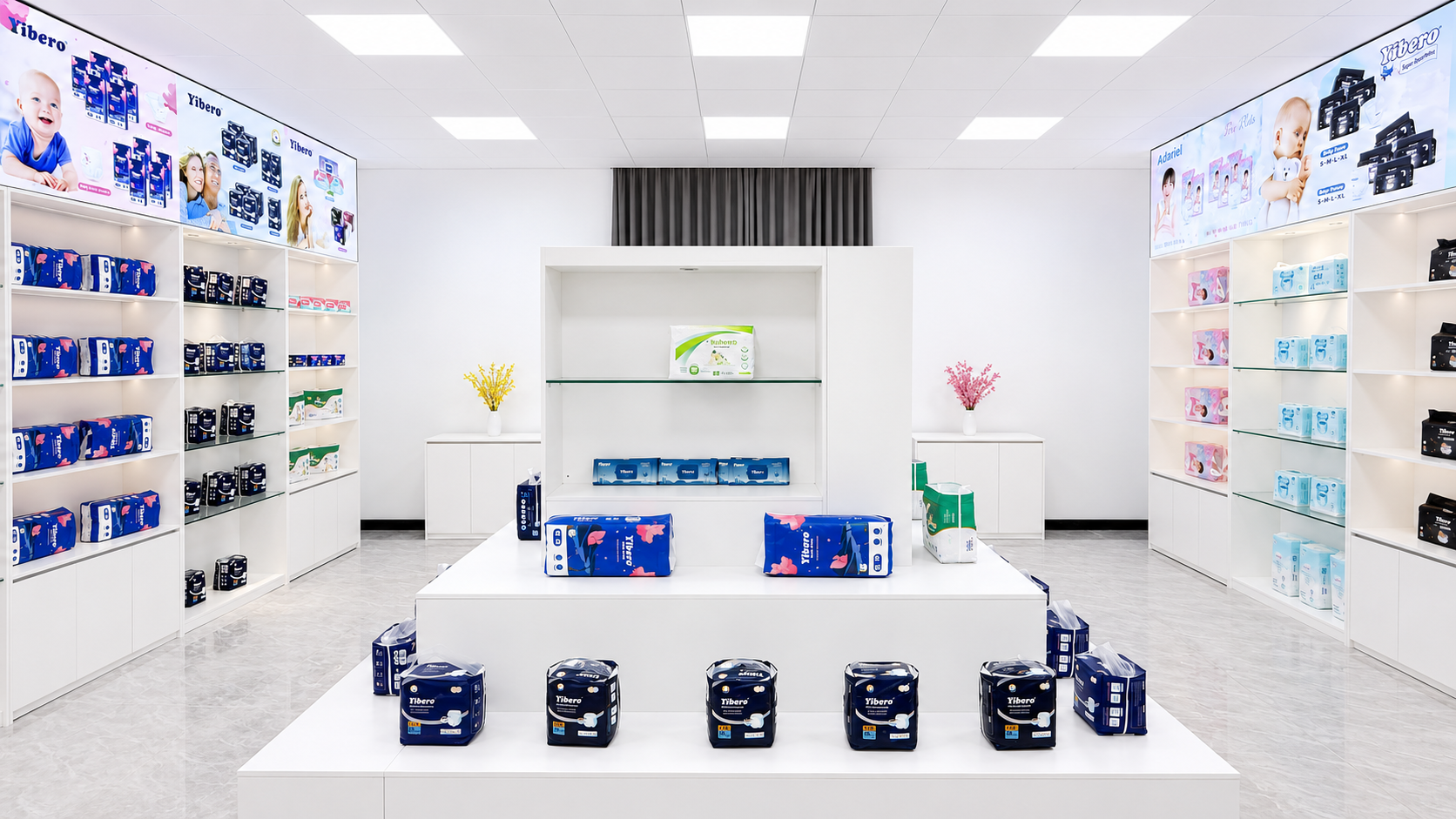
Sample room supporting core comparison, specification confirmation and pre-production sample approval. Image: Fujian Jiayue Sanitary Products Co., Ltd.
Frequently Asked Questions
1. Does a different absorbent core change the certification or documentation position of an OEM adult diaper order?
The core choice itself does not replace the compliance route. ISO 13485 is a quality-management-system standard, and Fujian Jiayue Sanitary Products Co., Ltd.’s certificate (No. NOA2314356, valid 2023-12-06 to 2026-12-05) has a scope limited to Class I medical device sales; it does not by itself classify every diaper as a medical device, approve a product for a target market, or prove manufacturing certification. Jiayue’s CE Declaration of Conformity for adult diapers covers sizes S/M/L/XL/XXL and Class I products under Rule 1, Annex VIII of Regulation (EU) 2017/745, referencing EN ISO 14971:2019, EN ISO 15223-1:2021, EN ISO 20417:2021 and the EN ISO 10993 series. Because a core or material change can affect the technical file, buyers should verify product classification, intended use, labeling and product-specific test evidence for the destination market before the order is placed. In the United States, the FDA classifies adult diapers as medical devices when they are intended for incontinence treatment.
2. Can Jiayue supply both a fluff pulp & SAP core and an ultra-thin SAP paper core for the same adult diaper project?
Yes. SAP/fluff-pulp or composite core options are available, and Jiayue offers both core options for selected diaper products. Absorbency target can be customized, custom absorbent core specifications can be reviewed, and material options include hot-air or spunbond nonwoven, cloth-like backsheet, tape or pull-up format, 3D leak guards, wetness indicator customization and waistband customization. There is no universal performance advantage between the two structures; the suitable option is the one that passes the agreed tests against the approved specification and sample under the same conditions.
3. What should private-label importers check when shortlisting China OEM adult diaper manufacturers?
Check the legal entity and its management-system certificates, the certified scope and validity, and the documents available for the destination market. Confirm the core and material options the manufacturer actually offers rather than assumes; confirm MOQ conditions, size mix and lead time in writing; and confirm the quality-control sequence, including specification review, pre-production sample approval, in-process checks and pre-shipment inspection. Fujian Jiayue Sanitary Products Co., Ltd. holds ISO 9001 (No. NOA2314690) and ISO 13485 (No. NOA2314356) certificates, offers OEM, ODM and private-label production, and supports artwork and packaging coordination, export-document preparation and shipment planning.
4. How do MOQ and commercial terms change when a custom absorbent core is specified?
OEM order MOQ depends on product, size mix, materials, packaging and customization requirements, while ready-to-ship products may support lower MOQ; the final MOQ is confirmed in the quotation. Raw materials represent 60%–70% of diaper manufacturing operating costs (Expert Market Research), so a core change that alters SAP or fluff-pulp content can move unit economics and should be priced in the quotation rather than assumed. Specifications, materials, absorbency targets, graphics, pack counts and export packaging are confirmed through sampling and an approved specification, and payment options include T/T, L/C at sight and Alibaba Trade Assurance.
5. How do sampling, sample approval and lead time work for a core comparison order?
Free samples are prepared in 1–3 working days and buyers pay courier costs; sampling support is available for orders. When two cores are compared, both should be produced in the same size with the same topsheet, backsheet and ADL so the comparison is valid. Pre-production sample approval is required before mass production, packaging artwork is reviewed before production, and pre-shipment inspection is conducted. Typical production lead time is approximately 30–45 days, subject to sample, artwork, packaging and specification approval, and the self-owned factory supports shipment of more than 100 × 40HQ containers per month. To start a comparison, send your size range, absorbency target and packaging brief to Jiayue at info@jiayuediaper.com or Lena@jiayuediaper.com, or via WhatsApp at +86 159 8030 8853.
Conclusion: Decide With Measured Evidence, Not With a Label
There is no universal winner between a fluff pulp & SAP core and an ultra-thin SAP paper core in adult diapers. A fluff pulp & SAP core combines cellulose fluff pulp with superabsorbent polymer; an ultra-thin SAP paper core uses SAP paper as the main absorbent structure. Which one serves your program depends entirely on how each configuration performs against your target absorbency, thickness tolerance, unit weight and fit requirements when both are built on the same platform and tested under the same conditions.
The decision rule for importers is short: define the specification first, build both cores on one product platform, test with one agreed method and acceptance criteria, approve the variant that passes, and lock it into the pre-production sample and sales contract. That process is what turns a core debate into a defensible procurement decision — and it is the same process Jiayue applies to order-specific quality control, from specification review through pre-shipment inspection.
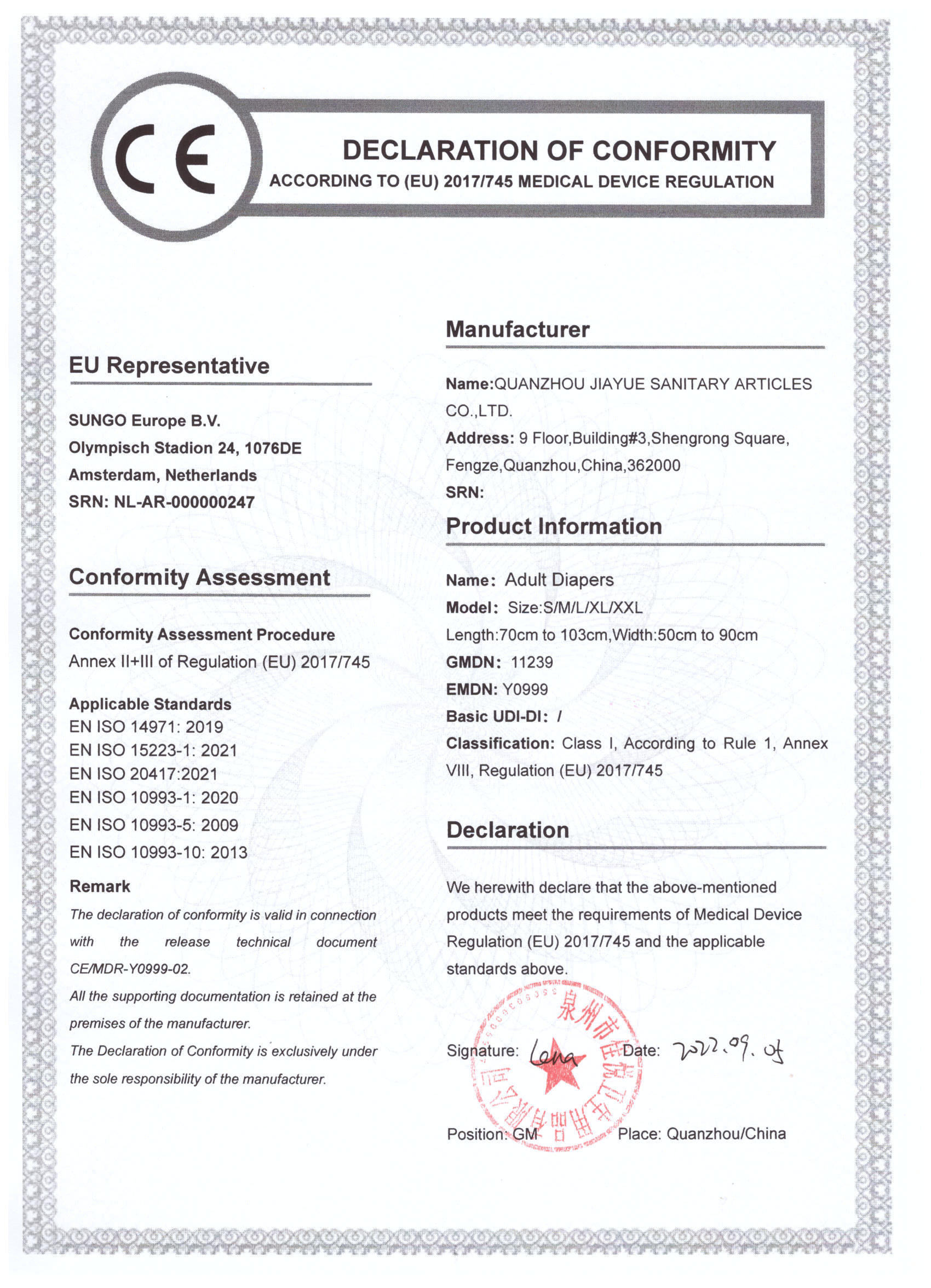
Compliance documentation is part of the core decision: the CE Declaration of Conformity for adult diapers covers sizes S/M/L/XL/XXL under Regulation (EU) 2017/745. Image: Fujian Jiayue Sanitary Products Co., Ltd.
Compare both cores on your own specification
Send your size range, target absorbency and packaging brief, and Jiayue will review a fluff pulp & SAP core and an ultra-thin SAP paper core against the same approved specification and sample conditions. Request samples, a quotation or the full product catalog to start the evaluation.
Email: info@jiayuediaper.com / Lena@jiayuediaper.com | WhatsApp: +86 159 8030 8853 | Website: www.jiayuehygiene.com
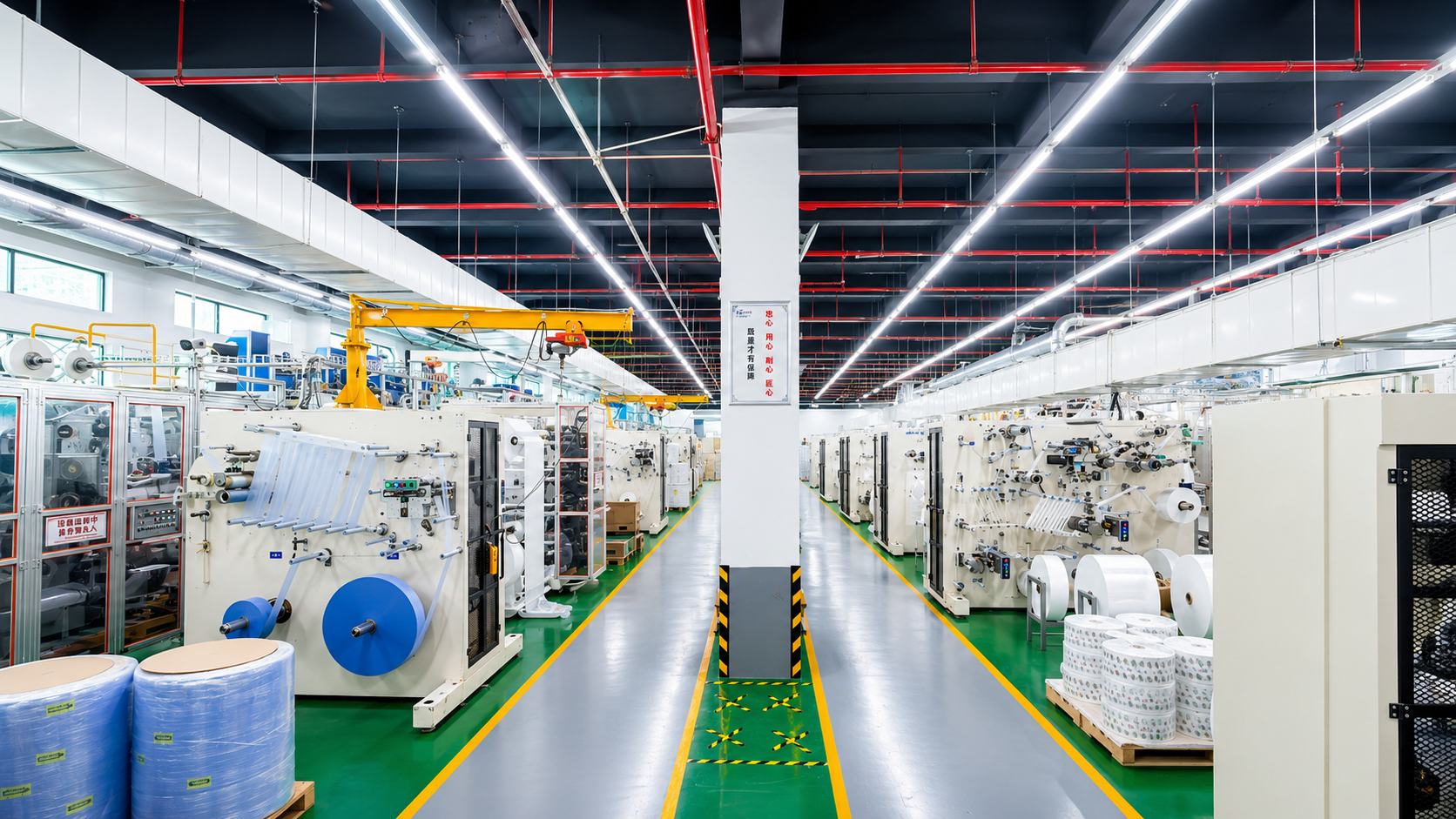
Production workshop supporting OEM, ODM and private-label adult diaper programs. Image: Fujian Jiayue Sanitary Products Co., Ltd.
Download the full product and specification reference: JIAYUE Product Catalog 2026 (PDF).
Note: Final capacity, MOQ, lead time, testing requirements, specifications and payment terms are confirmed in the quotation, the approved sample and the sales contract.
Have Questions or Need More Details?
Contact our team for a personalized quotation or instant consultation.
Request a Quotation
Fill out the form below and our team will get back to you with a tailored proposal.
WhatsApp Direct Chat
Prefer to chat in real-time? Message us on WhatsApp for instant assistance & quick answers.
- Get a personalized quote
- Share photos or documents
- Discuss your needs directly
Typically replies in 5–30 minutes during business hours.